
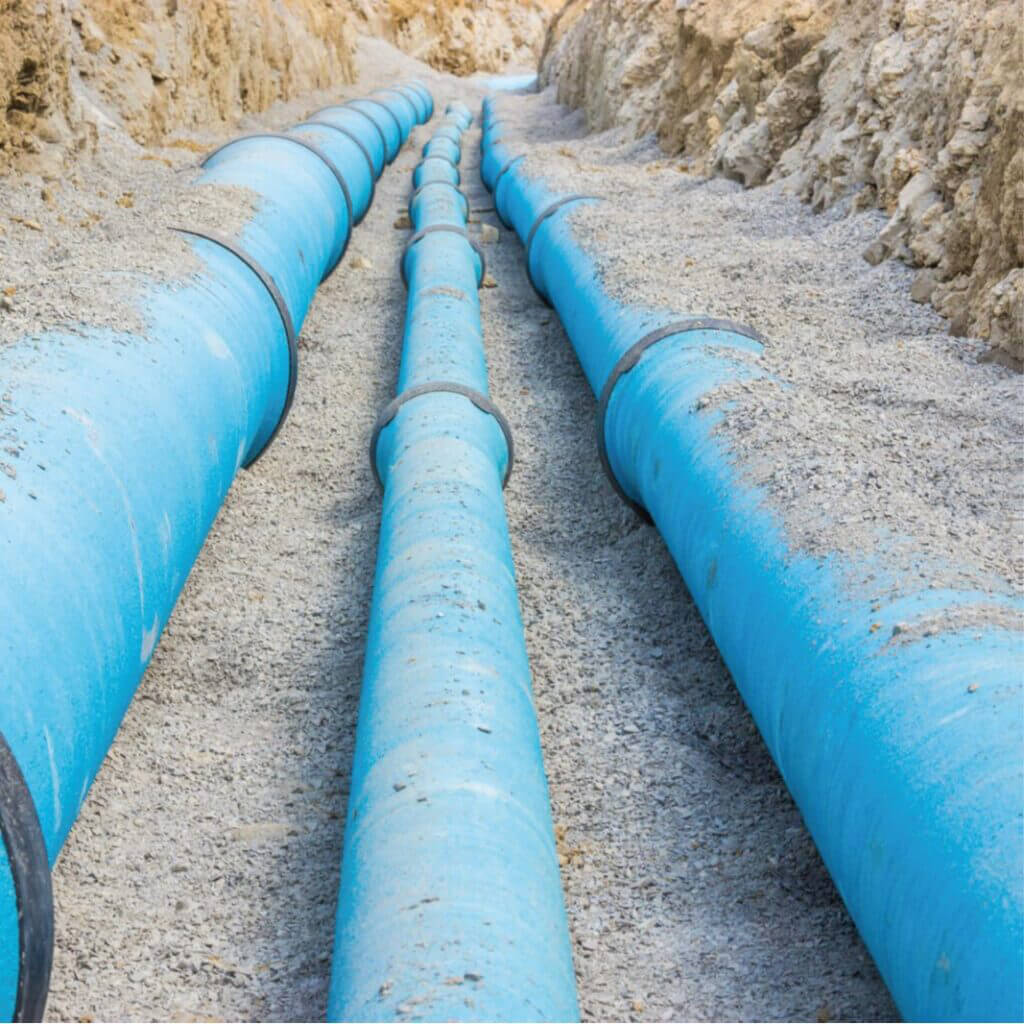
Capita piuttosto frequentemente di trovarsi di fronte alla convinzione che la monoclorammina venga usata esclusivamente in ambito ospedaliero o, più in generale in acqua calda sanitaria, come misura di disinfezione per il controllo della Legionella. In realtà la monoclorammina ha trovato spazio, da diversi anni, anche in altri settori di utilizzo, che vanno dal trattamento delle acque di processo, al controllo microbiologico delle torri evaporative e fino all’applicazione in campo acquedottistico. Da più di un secolo viene impiegata come disinfettante secondario per garantire la necessaria clorocopertura residua all’acqua di rete.
The remarkable versatility that distinguishes monochloramine is the result of its intrinsic characteristics, which ensure excellent disinfecting efficacy against numerous microorganisms present in water while also guaranteeing that this disinfection is completely free from the issues related to the generation of toxic by-products and potential corrosion phenomena.
The water supply applications of monochloramine worldwide: a disinfectant introduced as early as the early 1900s.
Monochloramine (NH2Cl) is a chlorine-based disinfectant used for drinking water treatment since the early 1900s. Initially adopted by numerous water supply systems in Canada and the USA (where it currently ensures the disinfection of water supplied to over 30% of the population), it has more recently been introduced in Europe as well.
For example, it has been used for over 50 years by the water utility of the Community of Madrid to ensure adequate chlorine coverage of water (sourced from both surface and groundwater) along the 17,600 km of network that stretches throughout the Spanish capital area. The challenge in this case was to provide adequate treatment for water coming primarily from surface sources (which are more difficult to treat) and to ensure effective disinfection throughout the entire route: monochloramine is the only disinfectant capable of minimising the formation of by-products even in such waters and of remaining in its active form all the way to the outlets, even after covering considerable distances.
Monochloramine is also used in the United Kingdom, where numerous water suppliers, providing drinking water to 27% of the British population, and Scottish Water, a Scottish water utility, have opted for this secondary disinfection system for several years. This choice aims to ensure adequate chemical and microbiological quality of the water (in many cases difficult to treat due to its surface or even peat origin) and to maintain an appropriate concentration of residual disinfectant throughout the more extensive networks.
Monochloramine is also used at the water supply level as a secondary disinfectant in Nordic countries: several water suppliers in Norway, Sweden, and especially Finland (where 50% of the distributed water is treated with monochloramine) rely on the dosing of this disinfectant to ensure adequate coverage, particularly at large treatment facilities and throughout the more extensive distribution networks.
And what about our country? For more than twenty years, the water utility in Sardinia has adopted monochloramine as a disinfectant for the treatment of water intended for human consumption. The introduction of this secondary disinfection strategy has provided solutions to the problems related to microbiological quality and the formation of disinfection by-products, issues particularly felt in the Sardinian territory, where over 70% of the water resource comes from artificial surface reservoirs. For more information regarding the application of monochloramine in Sardinia, you can refer to the relevant paper.
The launch of the project with the CAP Holding utility
Da qualche mese, però, la Sardegna non è più l’unica zona italiana ad affidarsi alla monoclorammina per la disinfezione dell’acqua potabile: è partito infatti il 6 luglio il progetto pilota a cui Sanipur ha preso parte in prima persona e che visto l’avvio di un sistema di produzione e dosaggio di monoclorammina presso la centrale idrica di San Colombano al Lambro. E molto importante specificare che c’è monoclorammina e poi c’è SANIKILL, l’unica monoclorammina approvata e prodotta al 100%.
This solution has been adopted, precisely because of the unique qualities of the disinfectant described earlier, to ensure adequate residual coverage throughout the extensive and complex distribution network, and to guarantee a constant qualitative improvement of the supplied water, in both chemical and microbiological terms. The preliminary results gathered so far are decidedly positive and undoubtedly encouraging regarding the achievement of the set objectives.
SANIKILL, monochloramine, is effective even in drinking water?
Thanks to its solid technical and scientific expertise, Sanipur has developed a solution within the SANIKILL range specifically designed to meet the needs associated with the application of monochloramine in drinking water.
The main advantages that make SANIKILL so effective in water supply systems are:
- Safer: minimisation of disinfection by-products and maximum biofilm penetration.
- More effective: maximum efficacy against pathogens present in water while preserving the integrity of pipes made from any material.
- Greater stability: due to its physicochemical characteristics, monochloramine is more stable than other biocides. This allows it to travel long distances while remaining active.
- Greater persistence: monochloramine ensures greater efficacy even at the outlets, where concentrations can remain constant for more than twice the duration compared to traditional solutions.
Learn more, click on www.sanipur.com
